
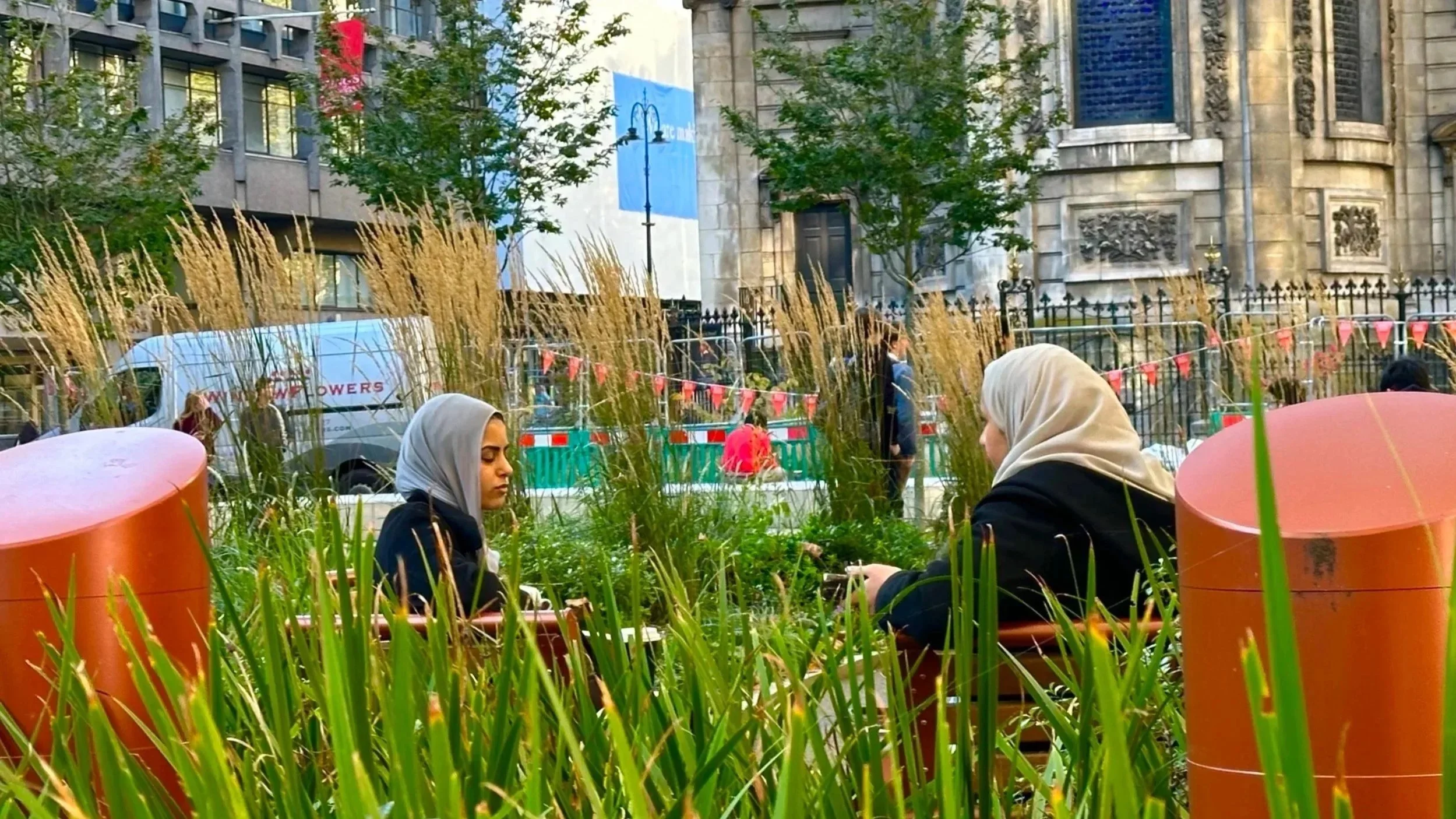
A six-week online programme bringing together fourth- and fifth-year architecture and engineering students from the University of Palestine to explore how regenerative design, systems thinking and the spatial knowledge of women and girls can inform the reconstruction of Gaza, one neighbourhood at a time.
Through walking observations, spatial diaries, participatory mapping and collaborative design, students will investigate how neighbourhood regeneration can reconnect people and place, restore ecological relationships, strengthen everyday mobility and rebuild infrastructures of care. The Laboratory supports students to develop locally rooted possibilities for regenerative reconstruction grounded in the realities, resources and spatial uniqueness of Gaza neighbourhoods.
From Research to Regenerative Reconstruction
The Summer Laboratory builds on my book and research, What if Women Designed the City? Rooted in the richness of women’s everyday experiences, the book explores urban development through the perspectives of women from diverse countries and backgrounds, revealing often overlooked possibilities grounded in the uniqueness of their neighbourhoods. Drawing on in-depth walking interviews with women, the research identifies 33 leverage points where policymakers, urban professionals and communities can intervene in planning systems so that cities work better for women and girls — ultimately benefiting everyone.
In Gaza, these ideas are not presented as models to be replicated, but as lenses to question, test and adapt through students’ own knowledge of place, lived realities and aspirations for the future. The Laboratory focuses on what is strong and alive, what continues to sustain everyday life, and what holds potential for regeneration. In doing so, it explores how reconstruction might move beyond replacing what has been destroyed towards rebuilding the meaningful layers of belonging, infrastructures of care, ecological integrity and sense of place.
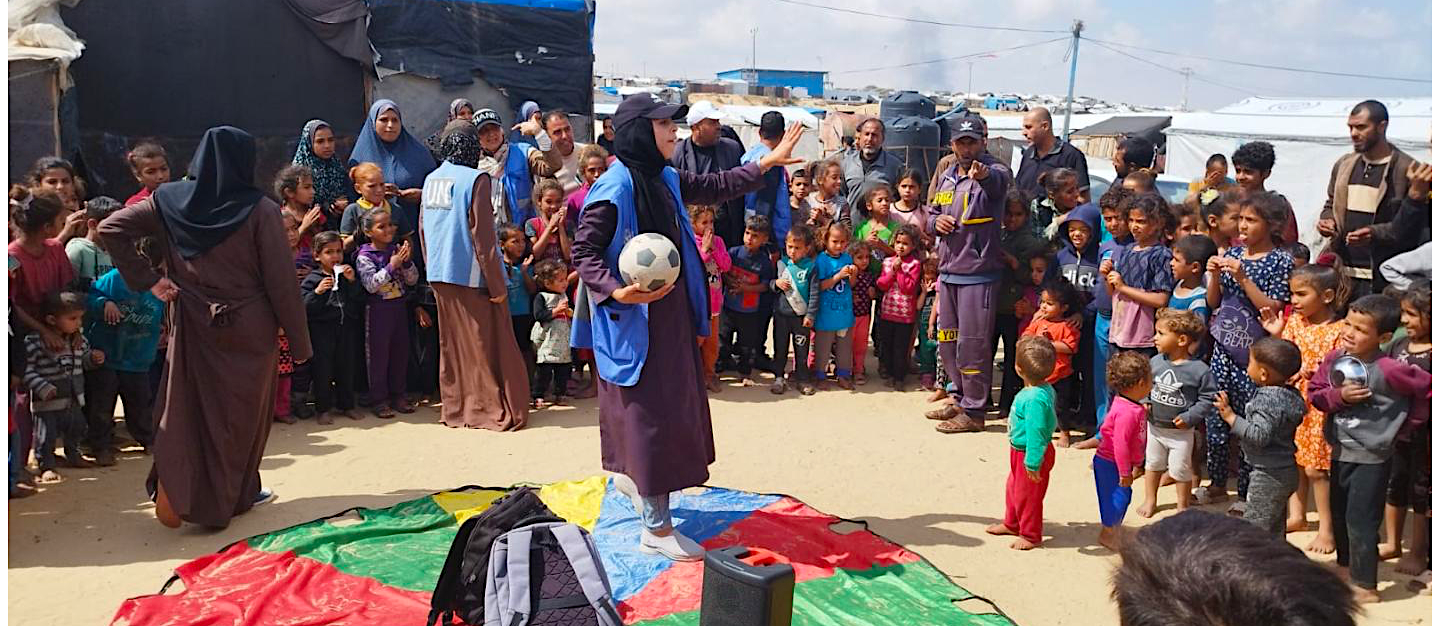
Shared spaces reveal what remains strong and alive in community life. Photo by UNRWA
The Learning Journey
Across six interconnected modules, students progressively investigate different layers of neighbourhood life before bringing them together through a final collaborative design process.
The Laboratory begins by exploring why post-war reconstruction requires new ways of seeing, listening and designing. Regenerative, women-centred and participatory approaches help reveal social, ecological and cultural strengths already present within neighbourhoods.
Modules include:
Sense of Place – Reading the Living Identity of Neighbourhoods
Green and Blue Systems – Regenerating Relationships with Nature
Mobility and Active Travel – Reconnecting People and Place
From Housing to Home – Rebuilding Infrastructures of Care
Final Collaborative Design Laboratory
New Maps for New Territories
The Laboratory combines systems thinking and regenerative design with women’s lived experience and spatial knowledge, using deep listening, walking observation, spatial diaries, participatory mapping and place-based investigation.
Students will progressively build a layered Neighbourhood Map, bringing together photographs, sketches and observations with their own lived knowledge of place. Each module adds another layer, allowing relationships, overlooked resources, broken connections and potential leverage points to become visible.
At the heart of the process is an invitation to let go of old maps to explore new territories: to move beyond inherited planning assumptions, recognise what remains strong and alive, and develop new ways of reading the complex realities of reconstruction. In this sense, the Laboratory is not about designing Gaza from elsewhere. It is about creating conditions in which a new generation of Palestinian architects and engineers can bring new methodologies into dialogue with their own spatial knowledge and explore what regenerative reconstruction might mean from within..
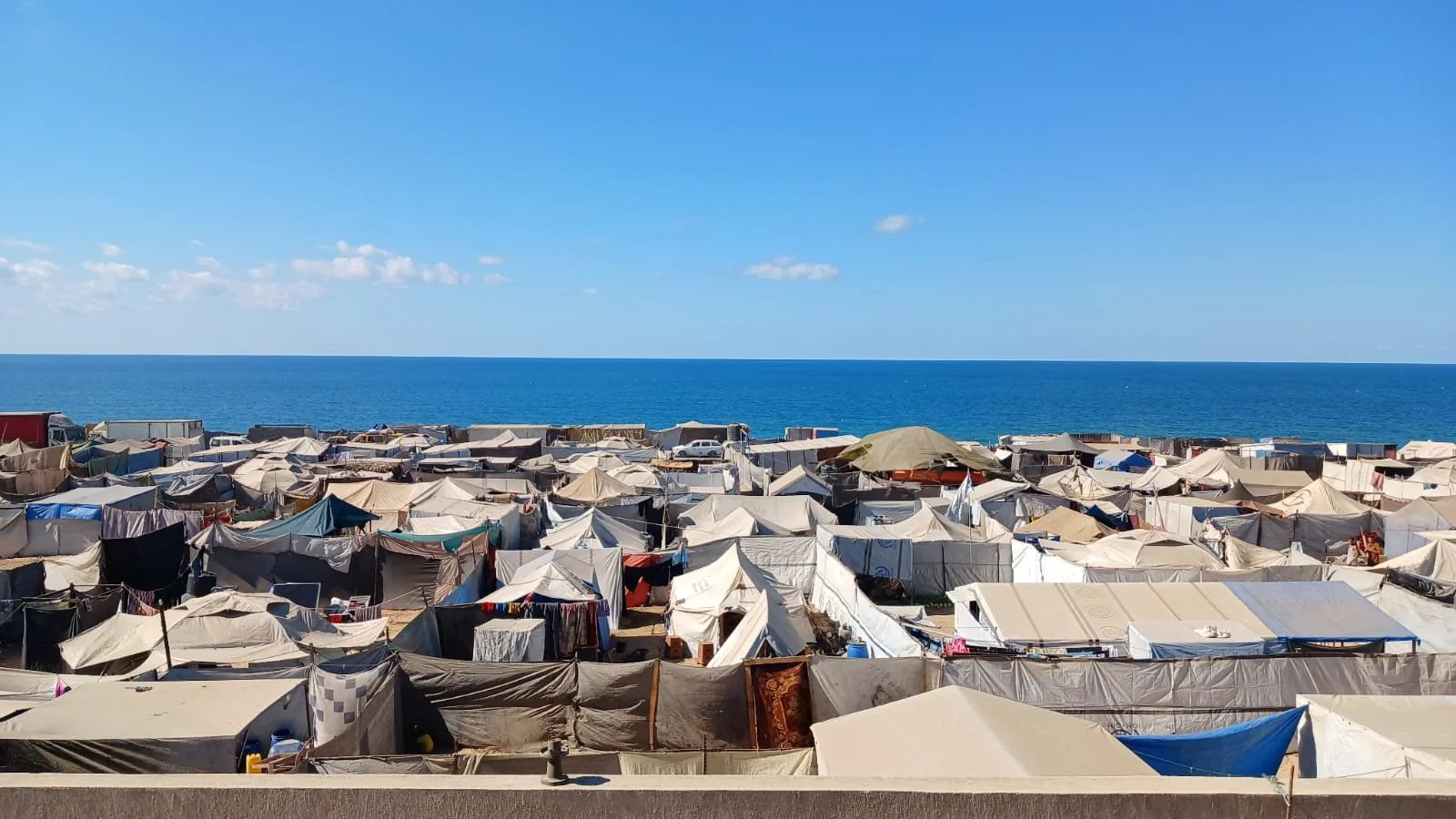
Rebuilding begins by listening – to people, place and possibility. Photo by Asmaa Alwhidy
Creating Conditions for Regenerative Thinking
The Summer Laboratory seeks to create the conditions for new regenerative thinking to emerge, enabling a new generation of Palestinian architects and engineers to pursue the lifelines that sustain people, place and everyday life. Reconstruction is approached as a nested living system, connecting people, professions, communities and neighbourhoods with Gaza and its wider bioregion.
Co-led by Dr May East. and Dr Nadine N. Abu-Shaaban, Professor of Construction Management. With the generous support of Ove Arup Foundation, Gaia Education and UN House Scotland .
📅 24 August – 28 September 2026
Register Here

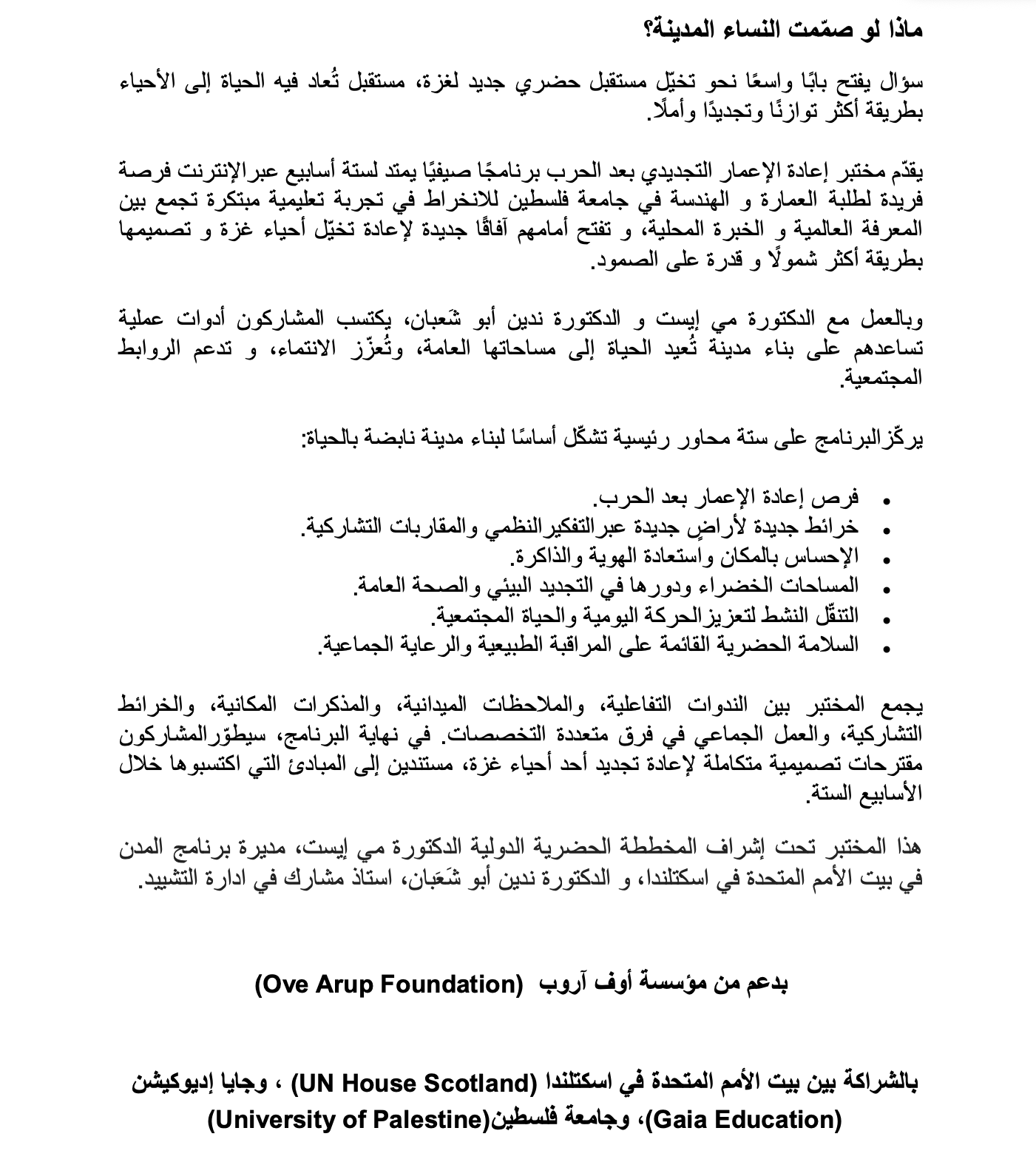
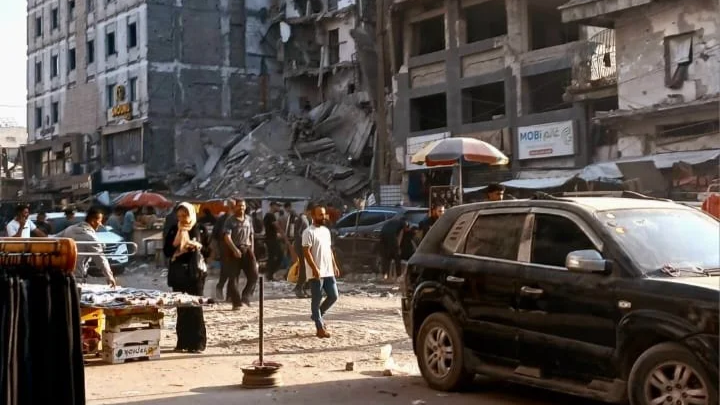
The future of Gaza will be shaped not only by what is rebuilt, but by how it is rebuilt. Picture by Asmaa Alwhidy