
How Can Bus Infrastructure Help Shape a Feminist City?
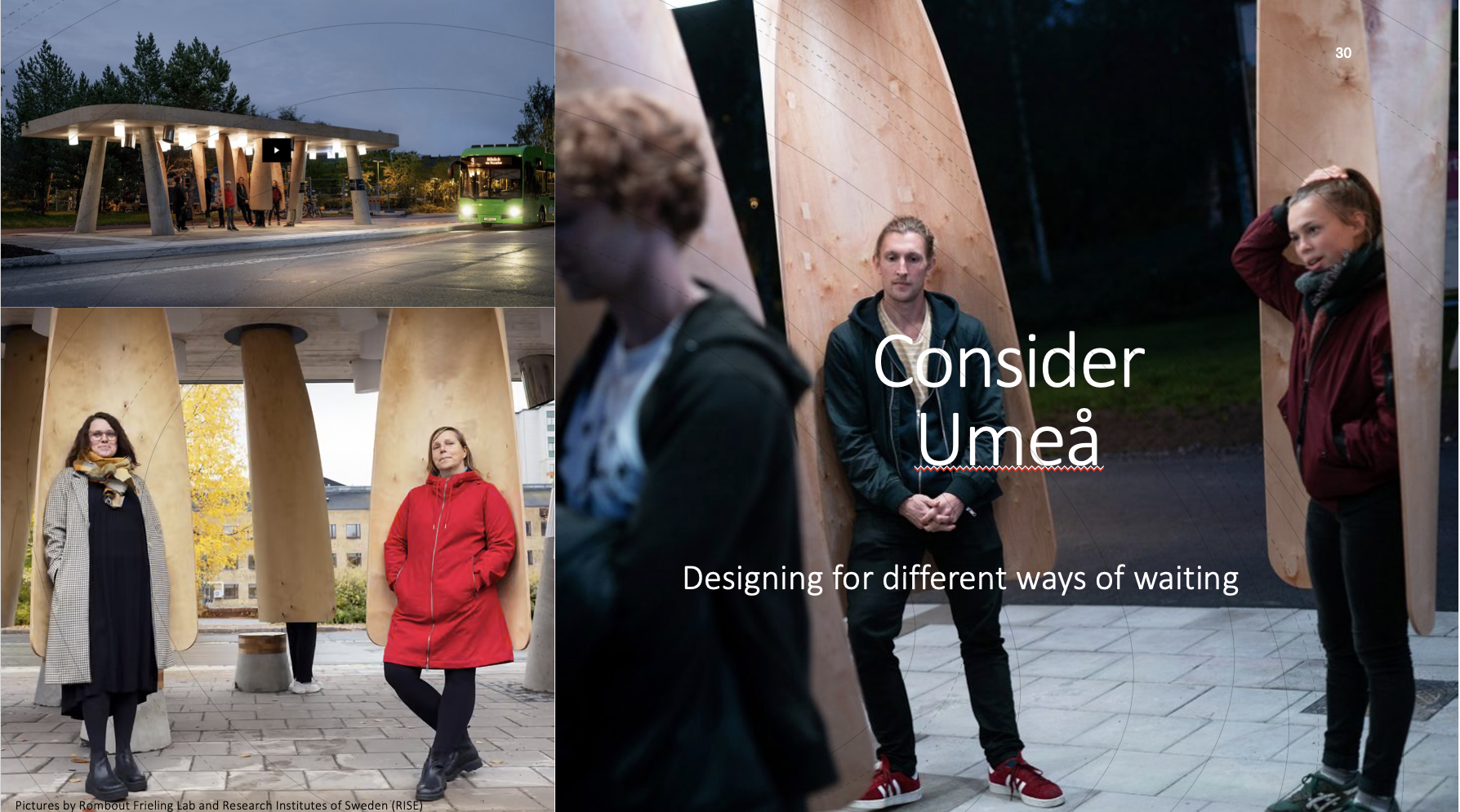
Rotating wooden pods offer shelter, support and different ways waiting, while gentle signals of light and sound announce approaching buses. The station takes responsibility for watching the road, giving passengers the freedom to pause, connect or simply be. Photo credit: Rombout Frieling Lab and Research Institutes of Sweden (RISE).
From Bus Infrastructure to Bus Carestructure: A Regenerative Design Approach
What if a bus stop could become a place of care, connection and ecological vitality, reflecting the distinctive identities of the neighbourhood and the people it serves?
As Glasgow pursues its ambition to become a Feminist City, this question invites us to reconsider the role of bus infrastructure in shaping everyday urban life.
Bus stops are among the most familiar elements of our streets. They are places where people wait, meet, navigate, observe and experience the rhythms of the city. Yet their design is often guided by transport efficiency, technical standards, passenger flows and the operational needs of bus drivers.
A regenerative feminist approach opens a wider field of possibilities.
What if we understood bus stops as part of an interconnected urban carestructure, nurturing the relationships between mobility, everyday care, public space, local identity and the living systems of the city?
Three cities, three ways of reimagining bus stops
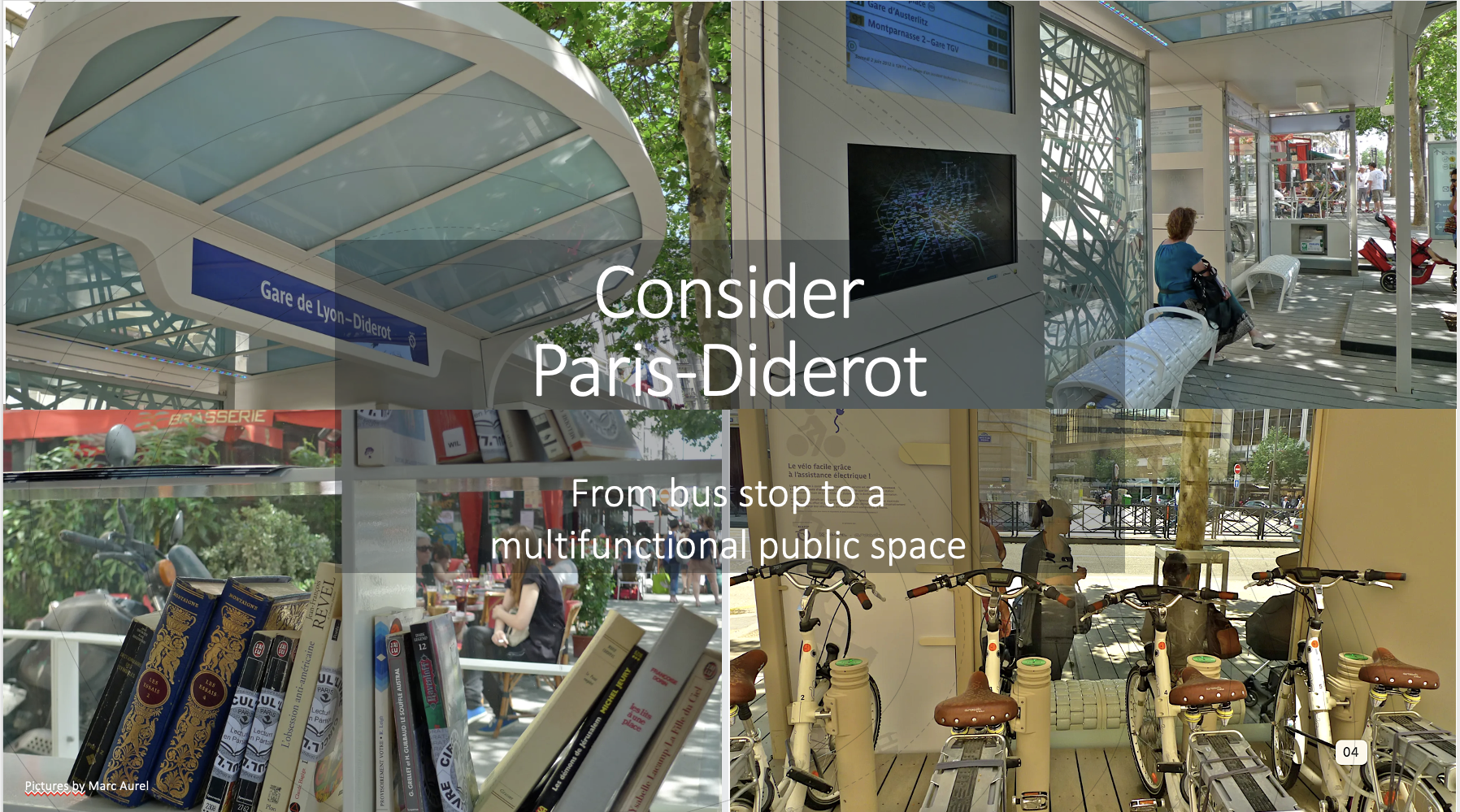
Designed by Marc Aurel, the 2012 RATP pilot brought together seating, books, shared bicycles, Wi-Fi, phone charging and real-time transport information, transforming the bus stop into a multifunctional public space serving both passengers and the neighbourhood. Photo credit: Marc Aurel.
Paris — From Bus Stop to Multifunctional Public Space
In 2012, Paris's public transport operator RATP launched Osmose, an experimental bus station on Boulevard Diderot, near Gare de Lyon. Designed by Marc Aurel, the pilot explored how an everyday transport facility could become a multifunctional public space serving both passengers and the surrounding neighbourhood.
Occupying 85 m², including 35 m² of covered space, the station brought together comfortable seating, heated panels, adaptable lighting, real-time transport information, free Wi-Fi and phone charging. A self-service library and electric bicycle rentals extended its purpose into the everyday life of the neighbourhood.
The experiment also reconsidered the relationship between the bus stop and the street. Transport information was complemented by local information, while different spaces accommodated waiting, resting, reading and informal encounters.
Although conceived as a temporary pilot, Osmose offered a compelling proposition: bus infrastructure can become a small but significant piece of urban carestructure, connecting mobility with comfort, neighbourhood life and opportunities for social interaction.
Umeå — Designing for different ways of waiting
In Umeå, Sweden, the Station of Being, designed by Rombout Frieling Lab in collaboration with RISE, reimagines the relationship between waiting, movement and the sensory experience of public space.
Its distinctive rotating timber pods offer passengers different ways of waiting — leaning, resting, turning towards others or finding shelter from the wind. Designed for the climatic conditions of a northern city, the station creates a series of intimate spaces within the public realm.
A smart roof uses gentle changes in light and sound to announce approaching buses, with distinctive signals for different routes. By taking responsibility for watching the road, the station frees passengers from constantly looking out for their bus, allowing them to pause, connect with others or simply be.
The project recognises that waiting is not a uniform experience. People inhabit public spaces in different ways, with varying physical, sensory, emotional and social needs.
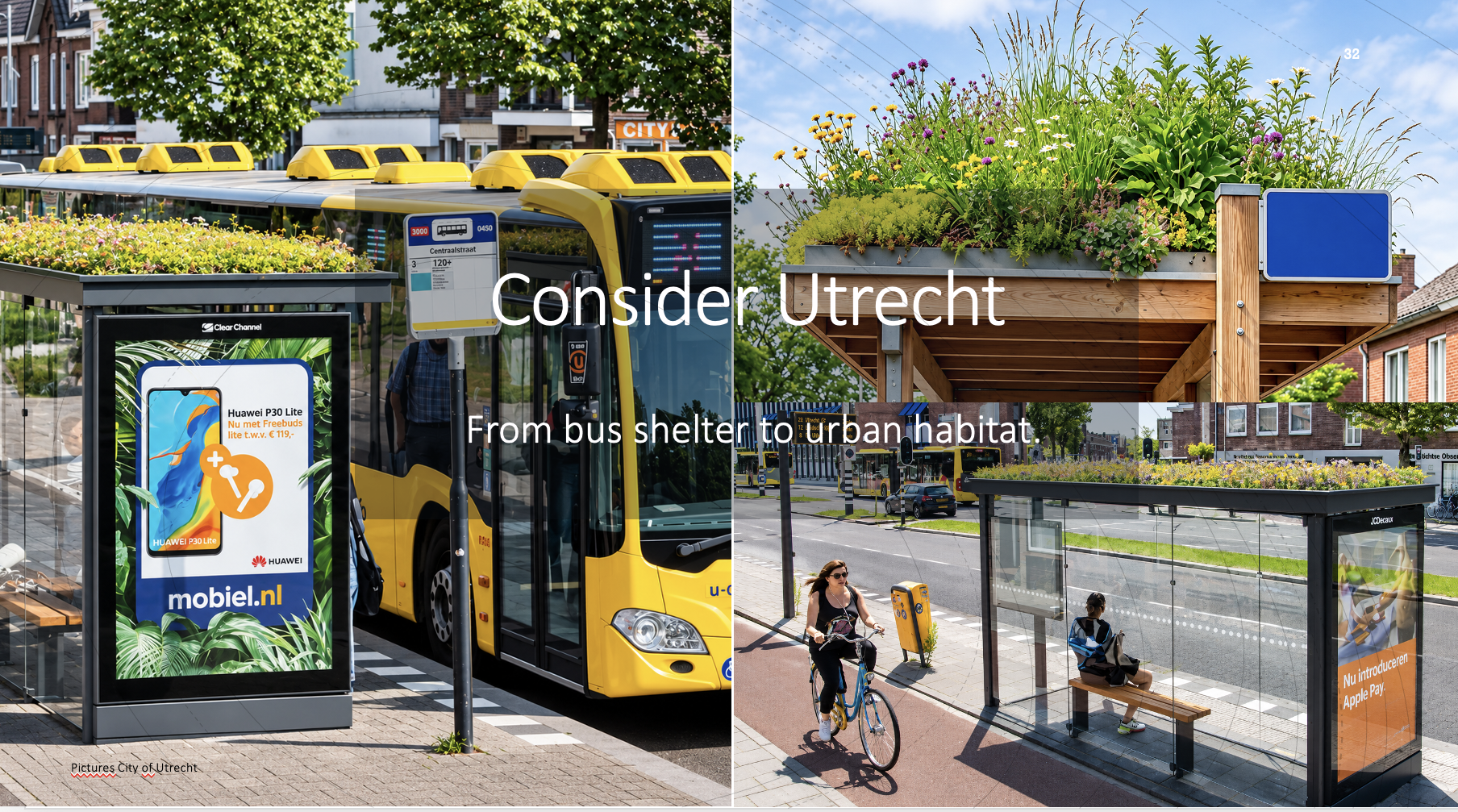
Utrecht introduced 316 bus shelters with green roofs in 2019, planted primarily with sedum to support pollinators, retain rainwater and help reduce urban heat. Photo credit: City of Utrecht
Utrecht — When bus stops become habitats
In 2019, Utrecht transformed 316 bus shelters into Buzz Stops, planting their roofs with sedum to provide food and habitat for bees, butterflies and other pollinators.
The initiative demonstrates how everyday transport infrastructure can support the ecological vitality of a city. The vegetated roofs help retain rainwater, moderate urban temperatures and create stepping stones for biodiversity across the urban landscape.
By bringing vegetation into the everyday experience of public transport, Utrecht expands the ecological function of the bus shelter. A structure designed to protect passengers from the elements also becomes a place where urban nature can find refuge.
Designing for the Rhythms of Everyday Life
In What if Women Designed the City?, I explore how women's mobility patterns reveal opportunities to rethink public transport through the lens of everyday care.
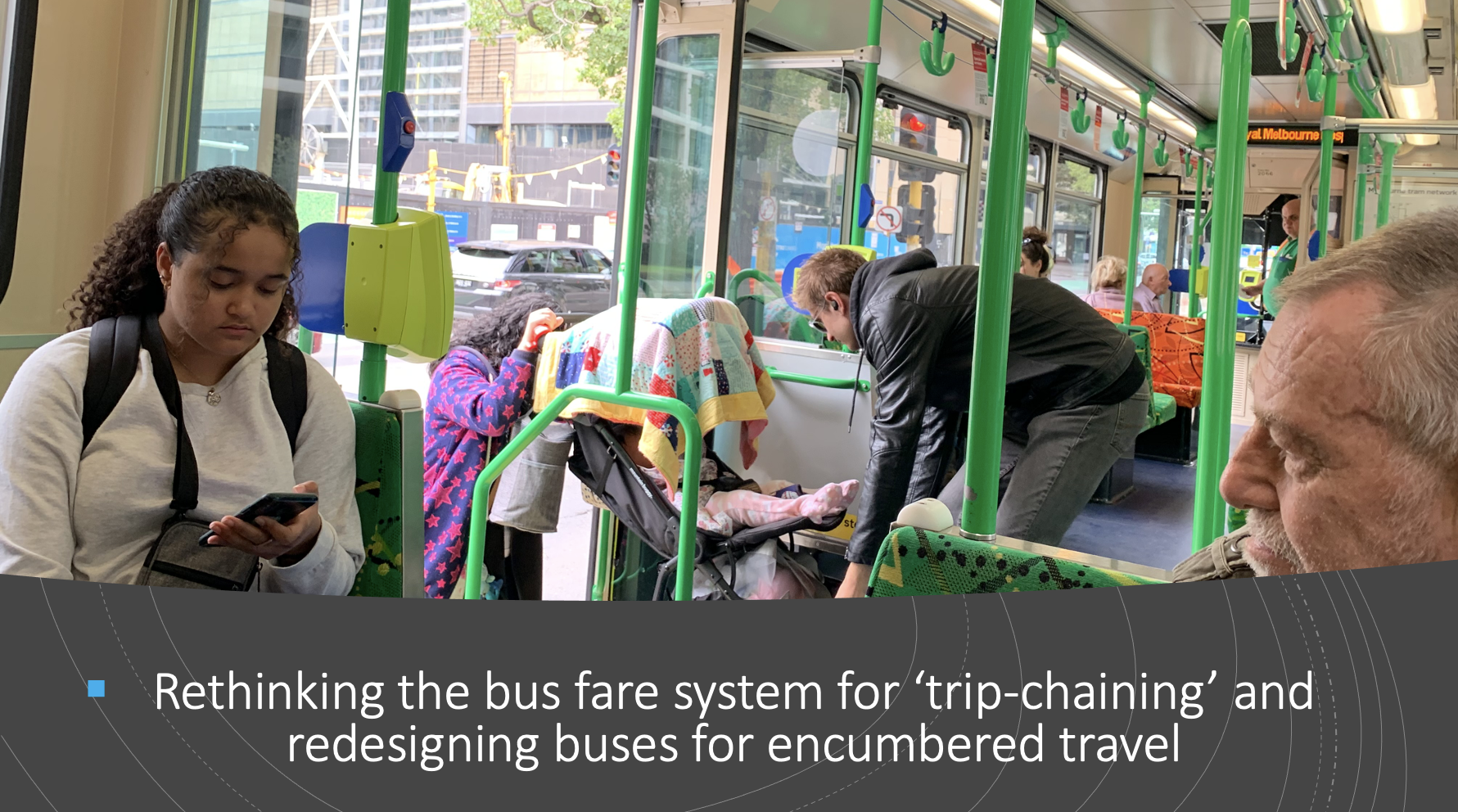
Leverage Point 16 — Rethinking the bus fare system for trip-chaining and redesigning buses for encumbered travel addresses two interconnected dimensions of mobility.
Trip-chaining describes journeys involving multiple stops — taking children to school, travelling to work, shopping, attending appointments or caring for relatives. These journeys reflect the complex rhythms of everyday life and the unequal distribution of care responsibilities.
Encumbered travel refers to journeys undertaken with children, dependent adults, pushchairs, shopping or other items that make movement physically demanding. The design of buses, the allocation of space and the frequency of services can profoundly influence these experiences.
Gender-responsive transport planning invites us to reconsider fare structures that penalise multiple journeys, improve connections between transport modes and design adaptable spaces that accommodate wheelchairs and pushchairs.
Four frameworks of mind for reimagining bus infrastructure
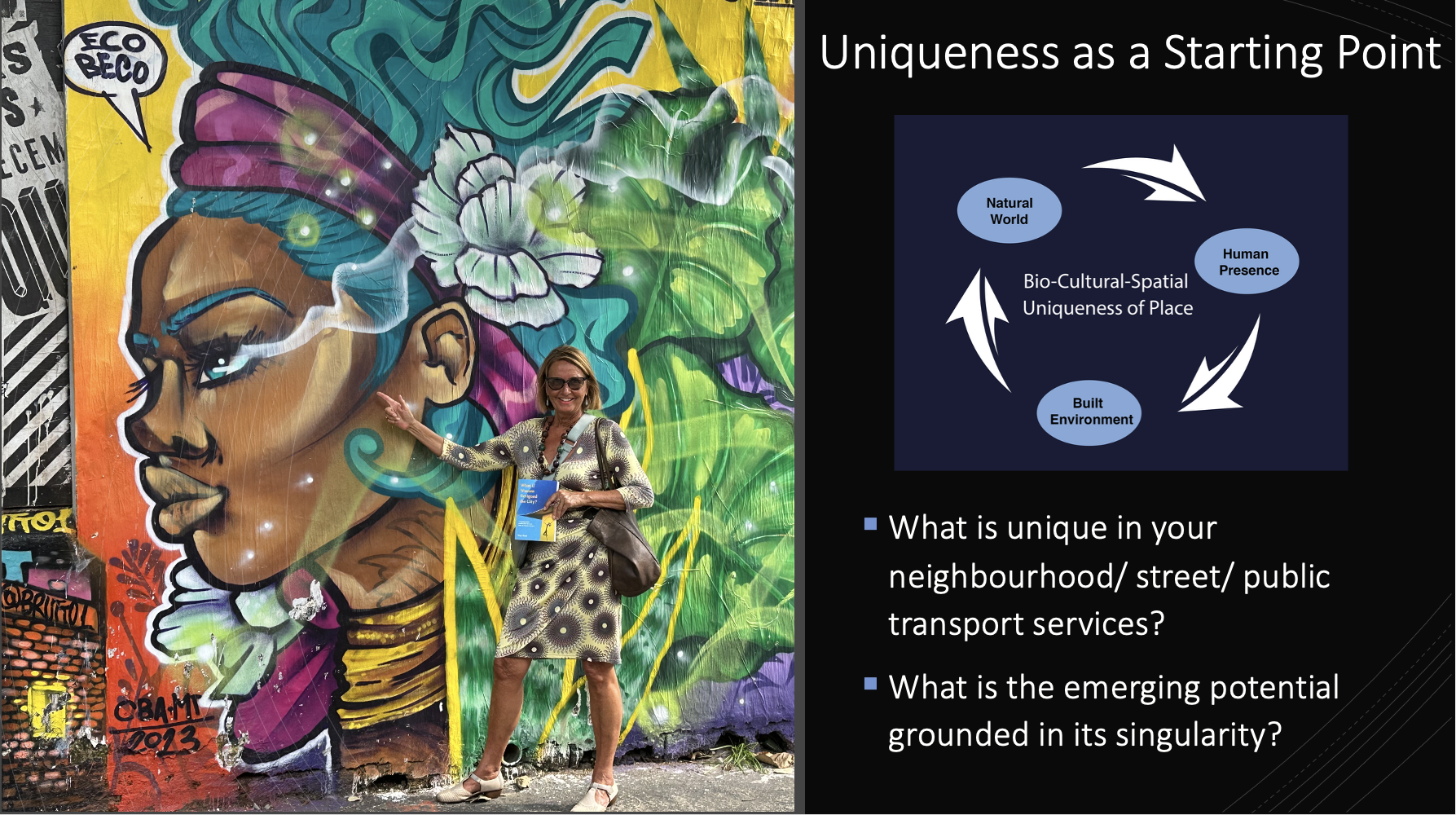
These examples offer inspiration, but regenerative design begins with the uniqueness of place. There is no universal model for a bus stop that works equally well everywhere.
I propose four interconnected ways of thinking to guide our enquiry.
1. Start with the uniqueness of place
Every street has its own identity, relationships, rhythms, histories and ecological conditions.
Before proposing interventions, we can ask: What makes this corridor distinctive? What is already working well? What existing capacities could be strengthened?
A regenerative approach begins by recognising the potential already present in a place.
2. Consider lived experience, not only standards
Women's and girls' everyday experiences offer essential knowledge about how transport systems actually function.
Walking interviews, participatory mapping, observation and deep listening can reveal the complexity of journeys, care responsibilities, waiting experiences and perceptions of safety that conventional transport data may not capture.
Who uses the bus stop? Who avoids it? Who travels with children, carries shopping, accompanies others or navigates the street after dark?
When we count people, we show that they count. When we listen to their experiences, we begin to understand what our measurements may be missing.
3. Think in systems and identify leverage points
A bus stop does not function in isolation.
It is connected to pavements, crossings, housing, local businesses, schools, green spaces, public services and the wider transport network.
Systems thinking invites us to explore these relationships and identify leverage points: strategic places within a system where a focused intervention can activate wider positive change.
Could a redesigned crossing strengthen independent mobility? Could a bus stop become a meeting place? Could new forms of stewardship support safety, care and neighbourhood vitality?
The question becomes: what wider changes could a single intervention activate?
4. Capillarise responsibility and cultivate regenerative potential
The transformation of bus infrastructure depends on the relationships between transport authorities, designers, planners, operators, local businesses, communities and the people who use these spaces every day.
Regenerative design invites us to distribute responsibility across this wider ecosystem.
What can we influence within our own professional practice? Which institutional procedures could evolve? Who else needs to participate? And what is the next feasible step we can take together?
This approach connects imagination with institutional capacity and collective action.
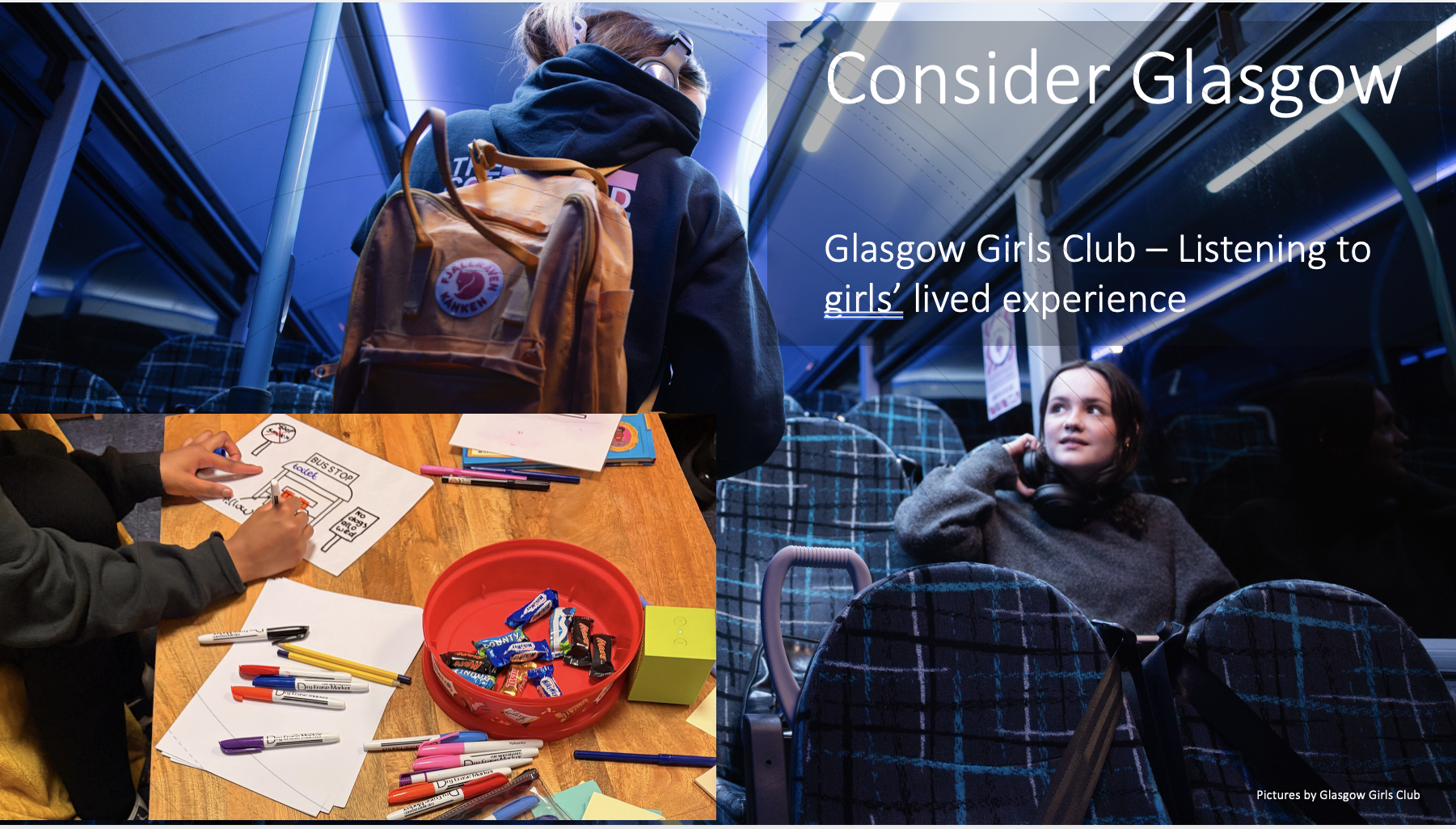
Building on its Where We Stop campaign, Glasgow Girls Club is engaging girls and young women in conversations about their experiences of buses and bus stops. With almost 400 girls engaged in just three weeks, their insights are helping explore how public transport can become safer, more welcoming and responsive to girls’ everyday lives, contributing to Glasgow’s ambition to become a Feminist City. Photo credit: Glasgow Girls Club.
From bus infrastructure to bus carestructure
Glasgow's ambition to become a Feminist City creates an opportunity to rethink how investment in transport infrastructure can contribute to the everyday lives of its users.
What if we began to see bus corridors not simply as routes for moving through the city as quickly as possible, but as interconnected places where mobility, care, community life and ecological vitality can flourish?
In our workshop, How Can Bus Infrastructure Help Shape a Feminist City?, we explored these possibilities through systems thinking, leverage points and collaborative enquiry, applying them to Glasgow's bus routes as they weave through distinct communities, each with its own identity, lived experiences and regenerative potential.
This shift calls for gender-disaggregated mobility data and meaningful engagement with users, listening to the diverse experiences, needs and aspirations of those who depend on public transport. Together, these insights can inform a transition from bus infrastructure to bus carestructure, nurturing the relationships between people, places and the living systems of the city.