
Cyber Resilience Is a Matter of Relationships

Hold (2026), Tarek Atoui, Tate Modern, London. An interconnected sonic landscape where instruments, technologies, environmental forces and human presence create a continuously evolving experience. Photograph: May East.
How Cyberattacks Happen
We often imagine a cyberattack as someone breaking into a computer system, stealing information or shutting down essential services. Yet cyberspace itself is a vast network of relationships and exchanges. Every second, people, devices, institutions and countries exchange messages, images, financial transactions, tools and knowledge. Quantum mechanics invites us to understand reality through interactions: ‘the world is a continuous, restless swarming of things’ (Rovelli, 2014). Cyberspace makes this particularly visible: we are all nodes in an immense, constantly changing network of connections.
Walking through Tate Modern's Turbine Hall, I encountered Hold, a monumental sound installation by Tarek Atoui. Suspended instruments, bamboo structures, microphones, electronic systems and resonating surfaces form an intricate sonic landscape. Sounds travel through the installation, are captured and processed, and return to the space in changing forms. Visitors move among the instruments, becoming part of an environment shaped by continuous interactions. The installation demonstrates a central insight from systems thinking: what matters is not only the individual components of a system, but what happens between them.
Like Atoui's installation, cyberspace is shaped by countless interactions, many of which remain invisible to us. What appears on our screens is only the visible surface of an immense network of software, infrastructure, information flows and human decisions.
A cyberattack occurs when someone exploits a weakness within this network. A stolen password, a deceptive email or a vulnerable software application may provide access to connected systems. Once inside, an attacker can steal information, lock files or disrupt essential services. A breach at one point can sometimes spread through other connections, with consequences far beyond the original entry point, potentially disrupting critical infrastructure, crossing national borders and escalating tensions between countries.
Understanding cyber resilience therefore begins with understanding interdependence: how systems communicate, where vulnerabilities emerge, how disruptions travel and how people and institutions work together to maintain essential functions.
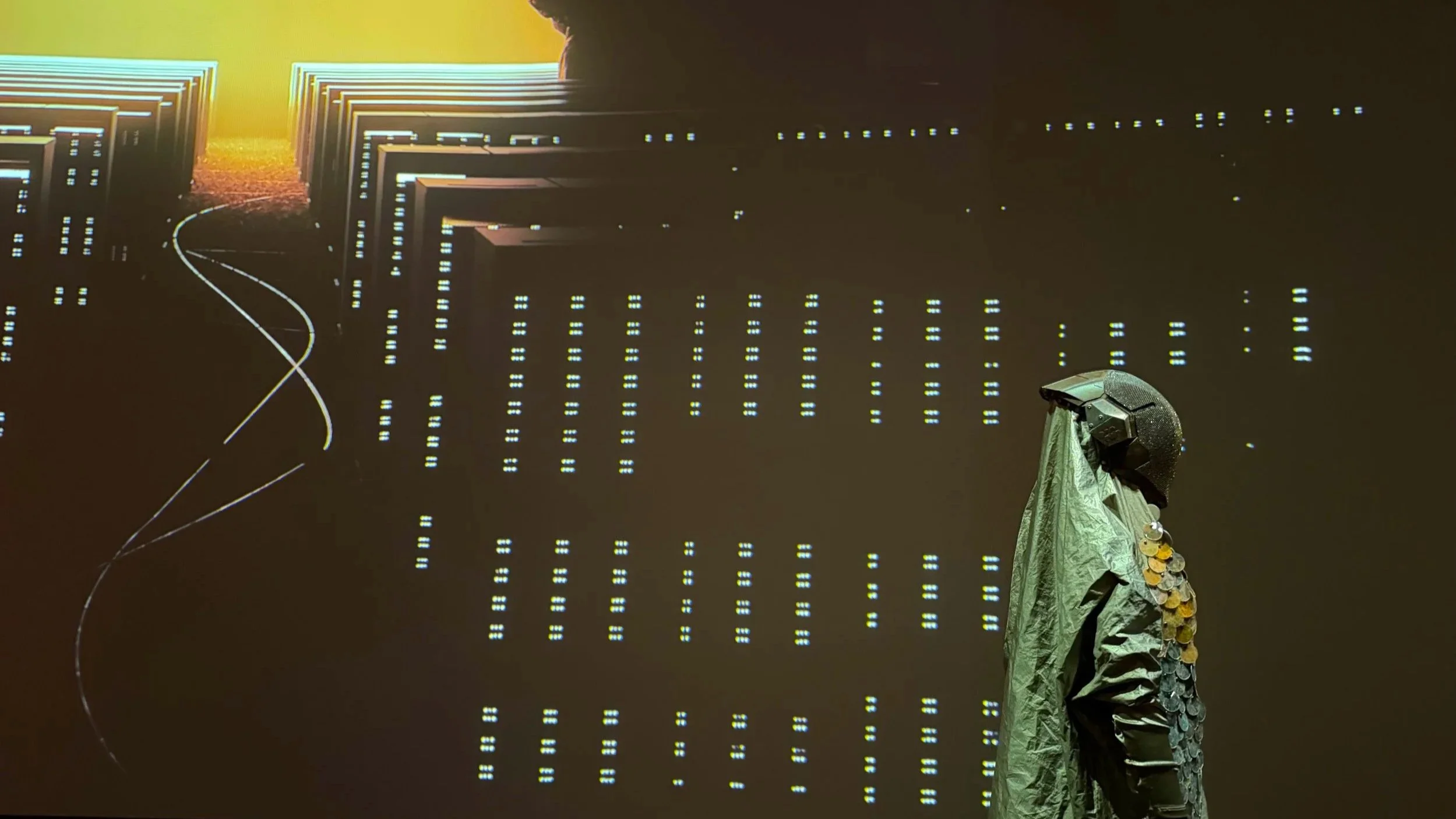
In Other Worlds, Liam Young, Barbican, London. An imagined technological landscape revealing the physical infrastructures and ecological dimensions of our digital world. Photograph: May East.
What Technology Can Do
If cyberattacks exploit weaknesses in interconnected systems, how can technology help us anticipate threats, detect vulnerabilities and prevent disruption?
In cyberspace, identity is complex. Those initiating an interaction are not always who they appear to be. Cyber attackers may impersonate trusted institutions, steal credentials or disguise malicious software as legitimate applications. Artificial intelligence can also be used to create convincing messages, synthetic voices and fabricated images.
Cybersecurity technologies help organisations recognise suspicious behaviour, verify identities, identify software vulnerabilities and monitor networks for signs of intrusion. Artificial intelligence can analyse vast amounts of data, detecting unusual patterns and helping security teams respond quickly. Threat intelligence adds another layer by examining how attackers operate and how their methods evolve.
IBM's X-Force Threat Intelligence Index 2026 offers insights into this changing landscape. According to the report, attacks beginning with the exploitation of public-facing applications increased by 44% compared with the previous year. Such vulnerabilities can provide entry points for ransomware, data theft and disruption of essential services. The critical PHP vulnerabilities disclosed in October 2026 illustrate how weaknesses in widely used software can expose interconnected digital systems to risks extending far beyond a single application.
Cybersecurity technologies can help detect suspicious activity, identify vulnerabilities and interrupt attacks before they spread. Yet as attackers adapt their methods, effective defence requires continuous learning and coordination.
The effectiveness of these tools ultimately depends on the people who design, interpret and use them. At the forefront of cybersecurity is a dynamic ecosystem of threat researchers, ethical hackers, AI safety engineers and systems architects working to understand increasingly complex digital threats.
Just as post-war systems thinking and cybernetics emerged to look at complex wholes rather than isolated parts, today's cyber defenders recognise that traditional, piecemeal software tools are no longer enough to secure our interconnected world.
This expanding field calls for expertise across disciplines, opening new possibilities for recognising talents and capabilities that have long remained underrepresented in cybersecurity

In Other Worlds, Liam Young, Barbican, London. An immersive exploration of imagined futures, inviting us to rethink the human perspectives, identities and capabilities shaping our technological world. Photograph: May East.
What Women Can Bring
Expanding women's participation in cybersecurity is a critical opportunity to address talent shortages and strengthen global cyber resilience. According to the World Economic Forum's Global Cybersecurity Outlook 2026, 45% of surveyed organisations identify shortages of cybersecurity skills and expertise as a major obstacle to cyber resilience. Yet ISC2's 2025 research found that women account for an average of just 22% of cybersecurity teams surveyed internationally.
Gender-diverse security teams can strengthen an organisation's cyber defences by bringing different perspectives to the identification and interpretation of threats. A uniform team tends to look at problems through the same lens, which can create dangerous blind spots when defending against adaptive adversaries. As highlighted by the WomenTech Network, diverse perspectives bring fresh analytical approaches and problem-solving methods to anticipating and responding to evolving threats.
Cyber resilience also draws on expertise beyond traditional technical disciplines. Women working in law, education, public policy, finance and psychology bring transferable skills in systems thinking, behavioural understanding, communication and adaptability. Initiatives such as Her CyberTracks, co-implemented by the International Telecommunication Union (ITU) and Germany's GIZ, are expanding pathways through training, mentoring and professional networks.
The future of digital security depends on widening our understanding of who we consider a cyber professional. Women entering the field from different disciplines bring perspectives that can reshape how risks are assessed, threats anticipated and crises managed. Expanding these pathways strengthens cyber resilience through a workforce that reflects the complexity of the world it serves.
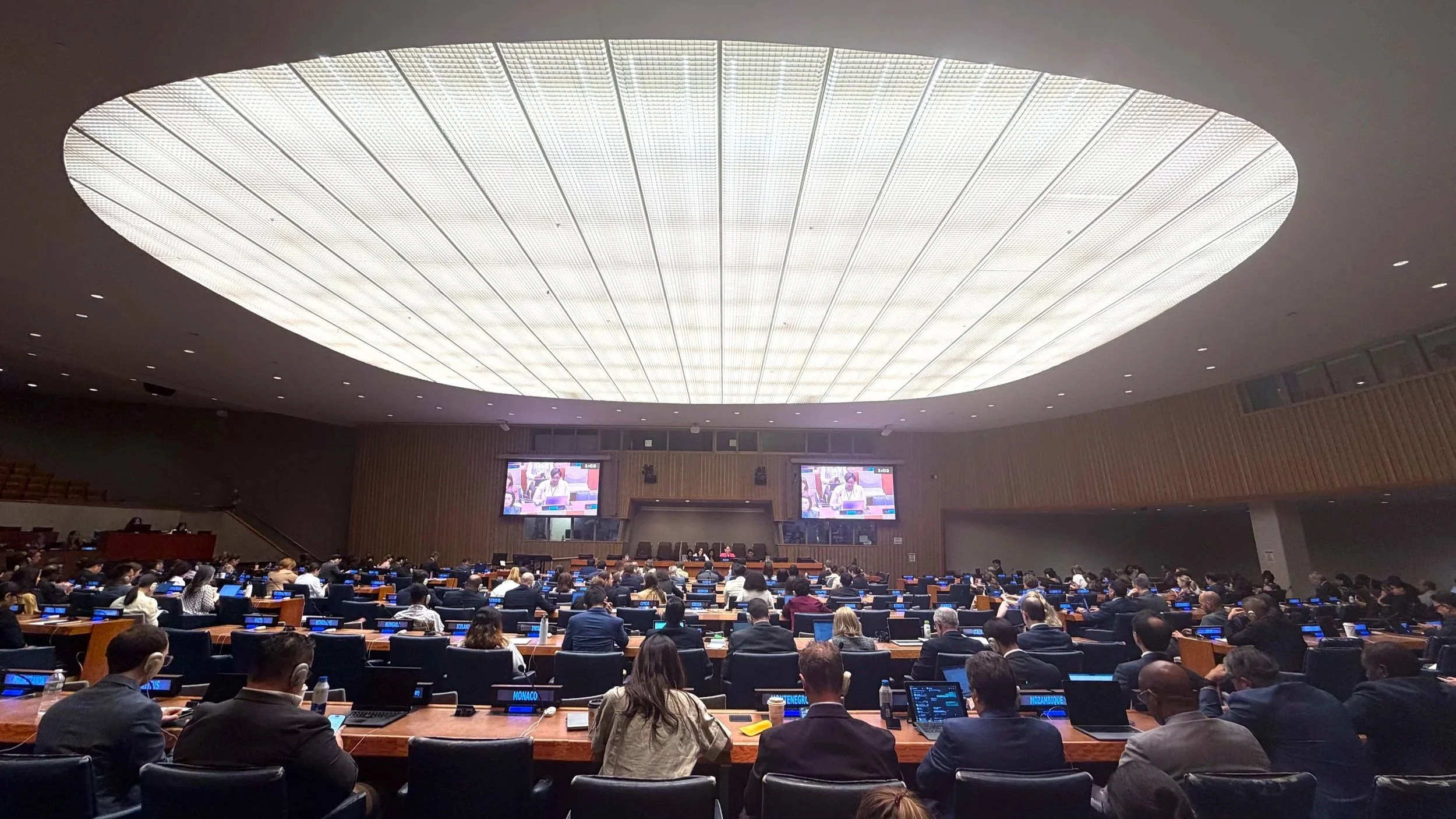
First substantive plenary session of the UN Global Mechanism on ICT Security, United Nations Headquarters, New York, 20–24 July 2026. Photograph: May East
What Governments Can Do
When cyber threats cross national borders, how can governments build confidence and prevent tensions from escalating?
Governments play a vital role in protecting critical infrastructure, strengthening national cybersecurity capabilities, developing regulatory frameworks and preparing for cyber incidents. Yet cyberspace connects countries whose political interests, security priorities and technological capacities may differ considerably.
A cyber incident affecting energy systems, hospitals or communications infrastructure can have consequences across borders. Uncertainty about who is responsible, what has happened and how another country might respond can increase tensions, particularly during periods of geopolitical instability.
This is where cyber Confidence-Building Measures (CBMs) become important. Developed through United Nations discussions on responsible State behaviour in cyberspace, these voluntary measures encourage transparency, information sharing, direct communication and cooperation between countries. Their purpose is to reduce misunderstandings, miscalculations and the risk of escalation.
One practical example is the UN Global Points of Contact Directory, launched in 2024, which enables governments to identify diplomatic and technical counterparts and communicate directly about significant cyber incidents. The UN Global Mechanism on ICT Security provides an ongoing forum for countries to advance confidence-building measures, exchange knowledge and strengthen their capacities.
Confidence is built through relationships, communication and repeated cooperation. Even when countries disagree, maintaining channels for dialogue can help prevent cyber incidents from developing into wider international crises.
From interconnected technologies to women's expertise and international diplomacy, cyber resilience emerges through the interactions between people, institutions and countries. Its strength depends on our collective capacity to anticipate, communicate, cooperate and adapt
Join the Conversation!
How can we strengthen cyber resilience in an increasingly interconnected world? What can gender-diverse teams contribute to anticipating cyber threats, and how can international cooperation prevent geopolitical escalation?
To explore these questions, join me for Beyond Threat Intelligence: Building Confidence for Cyber Resilience in the Security Track at IBM Z Day 2026 on 18 November 2026.
I'll be joined by guests bringing perspectives from cybersecurity, women's professional development and international cyber diplomacy.

The world as a web of relationships, where things acquire meaning through their interactions. Matisse, Dorit Levinstein, Park Avenue, New York Photograph: May East.